
Tracing Earlier Bayfield County Property Owners
Former owners of a Bayfield County property come to light through the deed chain. You work backward, from today's grantee to each earlier grantor. The newest parcel record in NOVUS is the natural starting point. Its latest deed reference names the parties and pins down the exact legal description. From there, each prior deed hands you the next set of names. Bayfield County has not posted the first year in the LandShark online index. Ask the Register of Deeds how far that index truly reaches. Older tax rolls and plat books can suggest names or lot numbers along the way. Only a deed proves the conveyance itself.
| Source | Years It Covers | Where Held | What It Shows |
|---|---|---|---|
| LandShark deed index | Online start year not posted | Register of Deeds / LandShark | Recorded parties and instruments |
| Older deed indexes and books | Ask the Register of Deeds | Register of Deeds office | Earlier transfer chain and copies |
| Historic plat books | 1906–2016 editions noted | Land Records, in person | Lots, roads and indexed parcel owners |
| Historic tax rolls | Every fifth year, 1880–1945 where applicable | Treasurer / municipal roll | Taxed parcel or owner context |
A recent transfer calls for the latest deed first. With an early lot description, compare the legal language against the plat book. Then ask the office about older index coverage. Historic tax rolls can place a name in a given year. Local histories may explain the industries or institutions tied to a place. Still, neither source proves the transfer on its own, so the deed records remain decisive.
How Far the Bayfield County Online Deed Index Reaches
The Register of Deeds sends online users to LandShark, a fee-based document system. Its notice says any document missing online is available from the office. However, the public county page does not state the first year the online index covers. It also skips the imaging cutover date. So do not promise a year. Never treat the earliest visible result as ownership's start. Ask the Register of Deeds about the grantor-grantee index. Ask which deed books cover the period your parcel needs.
Calling or writing? Give the current owner's name, the prior grantee if known, and the parcel's Tax ID or PIN. Add the legal description. The office can explain whether an older volume is searchable online. It may sit at the counter or in a different book or film reference instead. Confirm copy costs and certified-copy rules before ordering anything.
The LandShark notice states the online fee route and the office fallback.
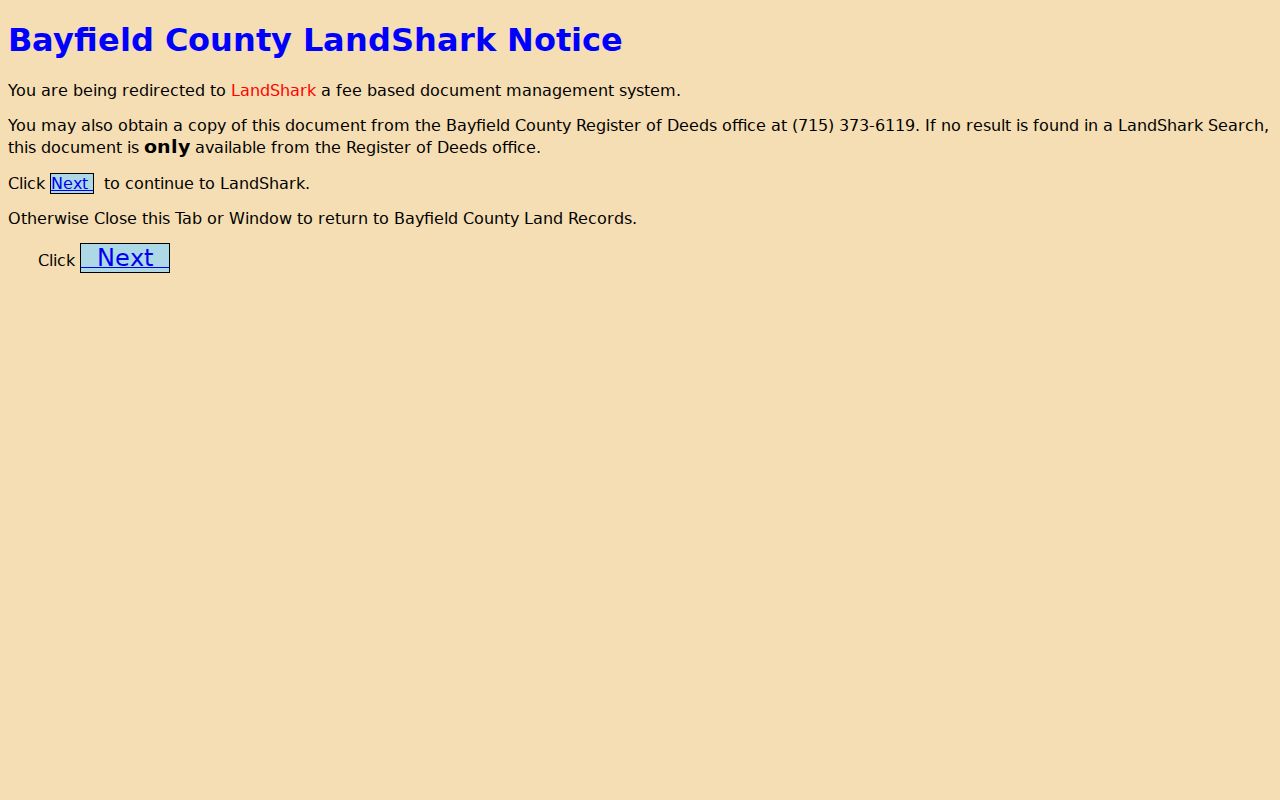
The county's stated fallback is the Register of Deeds, never an assumption that an unindexed deed failed to exist.
Reading the Bayfield County Chain of Title in Reverse
Start with the most recent deed and move backward. That instrument names the current owner of record as grantee and the seller as grantor. Treat the grantor as your next grantee. Then hunt for the deed where that party bought the land. Repeat the cycle down the chain. Verify each instrument itself. Matching a Bayfield County name alone can stitch together the wrong parcel records. Older deeds often describe the property differently. They may use lot, block, government lot, or metes and bounds instead of a modern situs address.
- Find the newest deed for the parcel and copy its grantor, grantee, legal description and recording reference.
- Search the named prior owner as a grantee to locate that owner's acquisition.
- Compare each instrument's description with the current parcel and later surveys.
- At an online-index gap, ask the Register of Deeds which older index or book covers the date.
- Grantor / grantee
- The parties conveying and receiving the stated land interest.
- Chain of title
- The sequence of deeds and other relevant instruments affecting the parcel.
- Legal description
- The land description used to identify the property, often more stable than an old street address.
Bayfield County Plat Books and Historic Tax Years
Land Records keeps plat books from 1906 through 2016 for visitors to use on site. The current edition covers 2022–23. It adds Bayfield and Washburn city road maps plus an owner index. According to the Treasurer, most municipalities have tax rolls online for 1970–2005. Rolls survive for every fifth year from 1880–1945 where applicable. Intermediate years are being scanned. These Bayfield County property records help point to an earlier owner or a lot number. They also give a road's historic context. They do not replace a deed.
Begin with a known deed date or a prior owner. Then cross-check the matching book or tax roll. A roll may name the person assessed rather than the true owner of record. A plat book shows where a lot sat in that edition. A recorded CSM or deed supplies the legal description. Note the edition and year beside each clue. That way a historic map is never mistaken for a modern parcel record.
The county's plat-book page lists historic editions and current access.
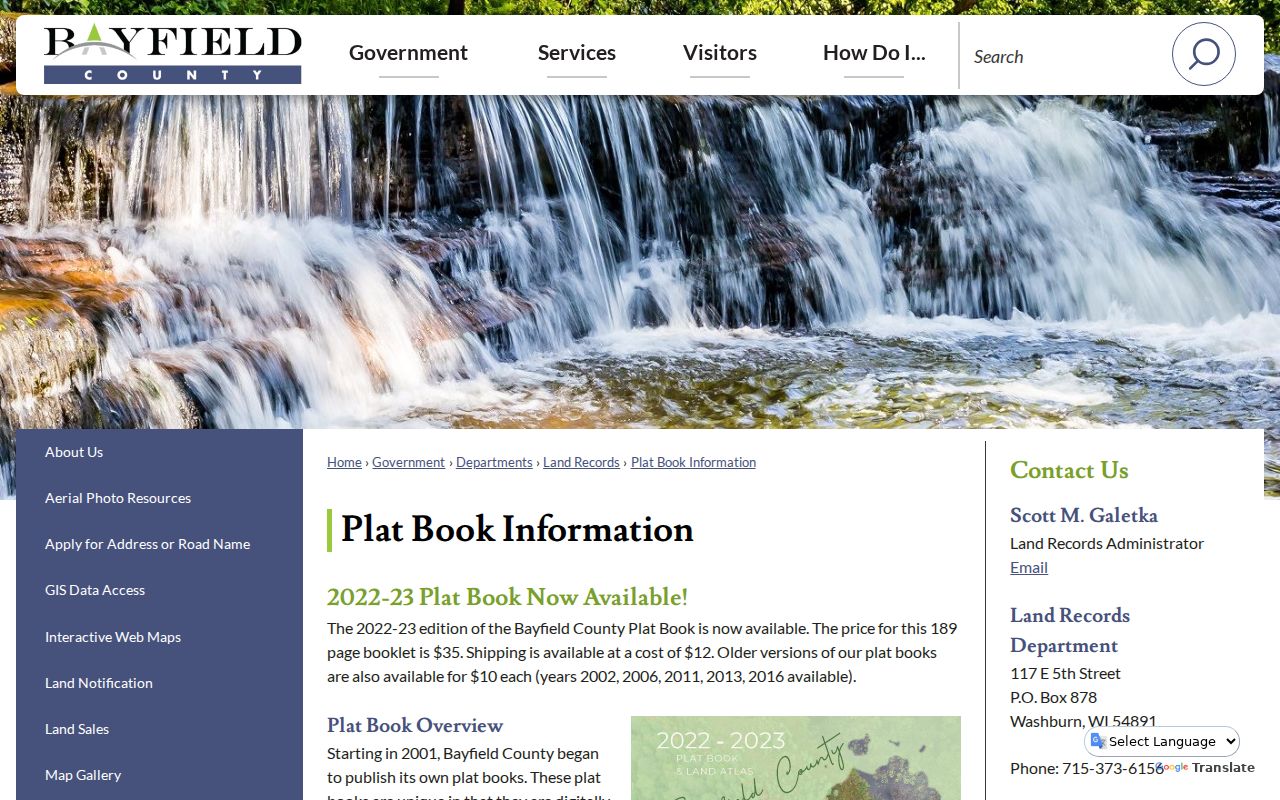
Treat a historical name or lot number as a lead for the next Register of Deeds search, not as proof that a transfer happened.
Former Bayfield County Owners in Mill and Railroad Records
Bayfield County history can point a property search toward companies as much as people. The Bay Land Improvement Company staked out Washburn's original town site in 1883. The town site served as a railroad port. Its plat held 1,230 lots across 366 acres. More than 150 lots sold the first year. The railroad yards, depot, and roundhouse lasted until 1967. Mill and quarry work also left business names and industrial parcels. Many later took on other uses.
For a historic tract, run the company or railroad name through the deed chain. Compare the legal description against the original plat. The Wisconsin Department of Financial Institutions business search may surface an entity filing. A filing alone does not prove the company owned a specific parcel. The recorded deed remains the link between a company name and the land.
The Wisconsin Historical Society catalog offers a digitized Bayfield County history pamphlet for local context.
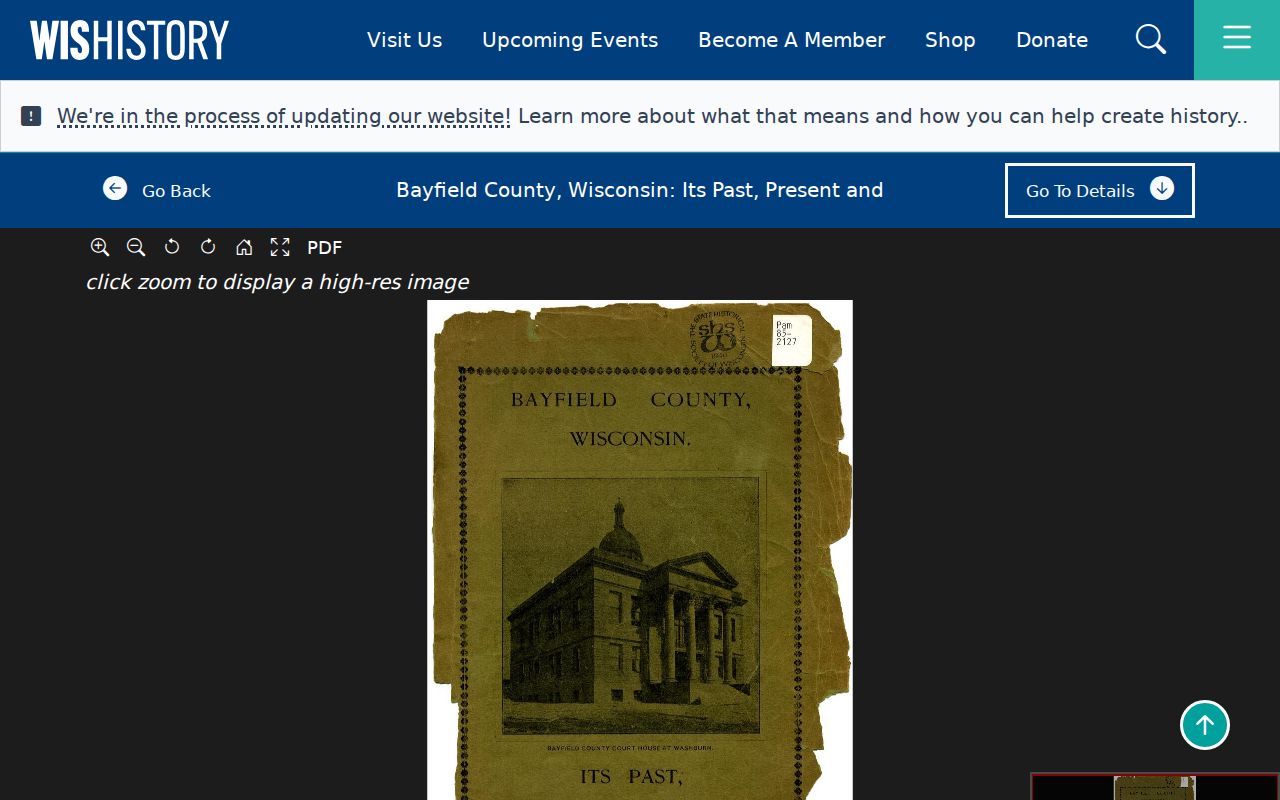
Historic accounts point to names, places, and dates. Verify true ownership in the deed and instrument chain at the recorder.
Estate Transfers in a Bayfield County Ownership History
A clean ownership chain can pause when an owner dies. When that happens, an estate or trust usually conveys the parcel. The deed may be signed by a personal representative, trustee, or another fiduciary. Compare that transfer with probate case information in Wisconsin Circuit Court Access. WCCA offers a case index online, though not every case document appears there. The recorded instrument from the Register of Deeds remains the public land transfer to follow.
Wisconsin vital records sit apart from property records. They carry their own eligibility and confidentiality rules. A death certificate is not an unrestricted shortcut to the estate file. Ask the county or state custodian for the correct access method, and rely on the recorded deed plus the probate record to establish the chain of property transactions. The Wisconsin Circuit Court Access information describes public case lookup and courthouse access for anyone tracing a Bayfield County estate transfer through the deed records.

Treat court entries as context for an estate transfer, then confirm the parcel conveyance in the recorded instrument itself.
Matching Former Owners When Bayfield County Names Change
A recorded chain in Bayfield County can list initials, spouses, business entities, or a fiduciary instead of the name on today's parcel card. Search reasonable spelling variants and organization names. Then compare dates and the legal description. A marriage, an estate, or an entity name can break a name-only search even when the land never changed. Parcel lineage and a plat reference help connect old descriptions to a current PIN.
Keep a small transfer ledger as you work. Record the date, grantor-to-grantee parties, document type, and recording reference. Mark any gap you have not resolved. If a transfer seems to involve a foreclosure, probate, or quiet-title matter, search WCCA by party and case number, then obtain the actual deed or judgment from the proper custodian rather than treating the index entry as the property record.
Former Owners, Corporate Names, and Transfer Gaps
Former owners in Bayfield County deed records may appear under a personal name. They may also appear as a trust, a company, or a representative signing for an estate. Follow the recorded grantor and grantee names in date order. Confirm each instrument covers the same legal description. Do not combine previous owners with similar names. Skip that step only when a parcel identifier, deed language, or another reliable property record ties them to this land.
When a name changes or a business reorganizes, search the exact name in the earlier deed. Add reasonable variations in the index too. A prior owner may have conveyed only an easement or partial interest. Read the instrument type and legal description before assuming every entry is a full sale. If the sequence skips a period, ask the Register of Deeds how to search older indexes. The county publishes no complete online starting year for LandShark.
A short transfer table keeps the work organized. List recording date, grantor, grantee, instrument type, reference number, and parcel description. Mark uncertain links for follow-up with the custodian. That discipline keeps former owner research anchored to documented changes in the chain. It also stops an assessment name, mailing address, or court index from standing in as proof of a conveyance.
How Far Back Bayfield County Ownership Records Go
Bayfield County publishes no public online starting year for LandShark. It also lists no complete historical deed-book cutoff. The chain may run past the online interface. Older indexes and materials sit in the office. The exact route depends on the date and instrument type. Ask the Register of Deeds rather than assuming an earliest year. Wisconsin Historical Society local-history material and the county's historic plat books add context. The deed books themselves document each transfer in the property records.
Lawful use. Former-owner research in Bayfield County is appropriate for property history and due diligence. Do not use names or addresses to track, threaten or harass a living person.