
How to Find Who Owns a Bayfield County Property
The fastest path to who owns a Bayfield County property runs through NOVUS. Enter a site address or an owner name. Open the matching Tax ID or PIN result. The Real Property Lister's card then shows the current assessor-side owner, the mailing address, and parcel identifiers. It also lists any sale details on file. Next comes the deed. Pull the deed reference from the card. Or search the Register of Deeds index directly to see the latest recorded transfer. The assessor roll gets you a name quickly. The deed is what confirms it.
- Search NOVUS by a single site-address or owner-name clue and select the matching Tax ID/PIN result.
- Write down the owner, mailing address, situs, legal description, Tax ID and 23-digit PIN.
- Find the latest recorded deed through the Register of Deeds and compare its grantee and land description.
- If a business entity holds the parcel, use Wisconsin DFI's corporate search to review its public filing.
Bayfield County Owner Names in the NOVUS Parcel Card
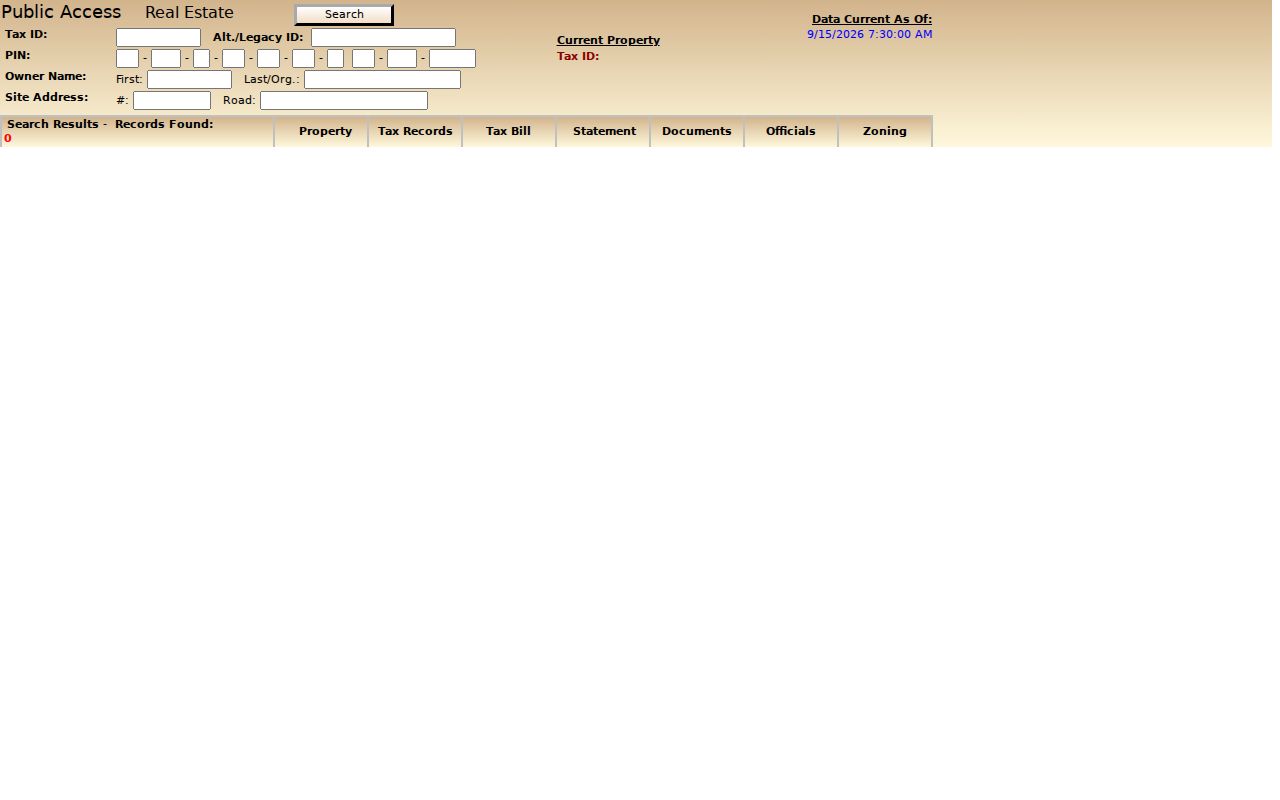
NOVUS lets you search Bayfield County parcels by owner first and last name. You can also search by organization, by site address number, road, Tax ID, legacy ID, or PIN. Stick to one criterion per search. Enter an organization exactly as it appears on the parcel record. A trust or LLC may hide the people who manage it. The card also lists two addresses. One is the physical situs. The other is a mailing address for notices. It may sit far from the parcel itself.
Those fields help you find a parcel. They do not prove who lives there or that title is clear. A name search may return several parcels. Compare the address and short legal description before picking one. The county suggests clicking the Tax ID/PIN row after a search. Ownership fields can lag behind a recorded sale. Note the card's "Data Current As Of" timestamp. If a transfer looks recent, check the newest deed at the recorder. The NOVUS owner and address search screen displays the available search fields.
Identify the parcel from the card first, then compare its owner field against the transfer instrument.
Where Bayfield County Ownership Information Comes From
Three county record routes describe a Bayfield County owner from different angles. NOVUS carries the assessor-side owner of record and the parcel card. The Register of Deeds records the instrument that transferred the land, while GIS locates the parcel and links its map pop-up to NOVUS or a survey reference. Wisconsin DFI adds a separate corporate filing when an LLC or corporation is the grantee. A tax bill or permit may name a payer or applicant. That context helps, but it never replaces the deed.
| Source | Owner Info It Gives | Access |
|---|---|---|
| NOVUS parcel card | Assessor-side owner and mailing address | Free public parcel lookup |
| Register of Deeds | Parties and terms in a recorded transfer | LandShark or office fallback |
| Land Records GIS | Mapped parcel, identifiers and municipality | Free viewer |
| Wisconsin DFI | Public entity registration details | State corporate search |
Owner of record means the name carried in a public parcel or deed record. It does not mean the person living on the site. The mailing address may be elsewhere. The grantee may be a trust or other legal entity. Never use a property record to infer who occupies a home.
Bayfield County Property Owners Held through an LLC or Trust
An LLC or trust on the deed changes the search. Copy the exact legal name first. Then work the right source. Wisconsin DFI's Corporate Registration Information System can confirm a business entity's status. It also shows the entity's public filing details. But it will not turn a member, manager or registered agent into the landowner of record. Those roles describe the entity, not a new deed. Trust records add another wrinkle, since a public parcel search may never reveal every beneficiary.
Estate transfers raise the same caution. The recorded deed may name a personal representative or another fiduciary. WCCA can help locate a probate case entry. Case information and the deed serve different purposes. Compare the instrument date and legal description against the same parcel in NOVUS. Entity names change. Parcels get conveyed later. So trust the most recent recorded transfer rather than an older organization search result.
Wisconsin DFI's business search is the state route. Use it for checking an entity named in a property record.
When a Bayfield County Owner Record Changes
A recorded deed does not change everything at once. The Real Property Lister updates parcel information after recording. Under the county's 2025–2027 modernization plan, parcel polygons generally update within a week after recorded documents arrive. Splits, merges and boundary changes can take up to two weeks, while web-map parcel updates post weekly. These timings describe parcel mapping. The county does not promise that every owner name changes on the same schedule. After a recent closing, let the latest deed serve as the legal transfer record. NOVUS is a parcel index, and it may lag.
Keep the search date and recording reference. That makes a mismatch easier to explain to the assessor office, and it keeps an old page capture from being mistaken for today's owner. A tax statement can lag too. It may still be addressed to a prior mailing location.
Fresh transfer. Confirm a recent ownership change in the newest recorded deed; do not rely on a parcel-card refresh date alone.
Bayfield County Owner Records and Address Privacy
Public parcel records in Bayfield County carry the county's own limits. Wisconsin's Safe at Home program gives substitute addresses to qualifying participants. Record custodians follow the confidentiality rules that come with them. A missing address means something. It is not a gap another portal will fill. Voter registration sits in a separate world from property ownership, with its own disclosure rules.
Use an owner mailing address for a legitimate property matter only. A parcel card is not a resident directory. Searching property records does not license unwanted contact with anyone. If a record seems to expose protected information, ask the custodian about the privacy rule that governs it. Do not pass the detail along.
Who Owns a Bayfield County Parcel after an Estate Transfer?
After an owner dies, the next recorded instrument may name a personal representative, trustee, or heir. Figuring out who owns the parcel now takes a simple comparison. Match the deed's grantee against the NOVUS parcel card. Confirm the same Tax ID or PIN applies. WCCA can surface a probate case entry. But the court case and the land transfer remain separate records. A death certificate is not an unrestricted property file. Wisconsin vital records carry their own access rules.
Bring the estate name and recording date to the Register of Deeds when requesting the instrument. The parcel card may still list the former owner. If so, keep the deed reference and contact the Real Property Lister. That is the right route for who owns the land, and it does not claim to tell you who lives there.
Who Owns a Bayfield County Property after a Recent Sale?
For a recent sale, the newest recorded deed names the grantee and describes the land. That deed is the answer. The assessor-side owner field may lag behind it. Bayfield County's modernization plan sets update periods for parcel geometry. Yet it promises no same-day refresh of every owner name. Compare the deed's recording date with the NOVUS "Data Current As Of" timestamp. Keep both references.
Still stuck on who owns the property? Ask the Register of Deeds to confirm the instrument. Ask the Real Property Lister whether the parcel update has arrived. A tax bill or permit applicant may carry a prior name or an agent, so neither record overrides the deed.
Limits of a Bayfield County Owner Lookup
A Bayfield County owner lookup reports names held in parcel and deed records. That is its whole job. It cannot confirm who lives on the property. It cannot untangle every interest behind an entity, or establish clear title. Recent transfers can precede a parcel-card update. Safe at Home confidentiality may also shield some addresses. Compare the latest deed, and contact the custodian when an ownership question carries legal or financial weight.
Lawful use. Use Bayfield County ownership information for property research, due diligence and civic transparency. Do not use names or addresses to monitor, threaten, target or harass anyone.