
What Bayfield County Property Tax Records Show
NOVUS splits each Bayfield County parcel result into separate fields and tabs. NOVUS shows assessed value and estimated fair-market value. The Tax Record tab holds the history. Tax Bill displays the bill itself. Statement covers payment and statement details, and the bill may also name the taxing municipality and its districts. Compare the same Tax ID and like years before drawing conclusions, because an assessor's value and a bill's amount answer different questions.
| Field | What It Shows | Where |
|---|---|---|
| Assessment value | Value carried on the assessment record | NOVUS parcel page |
| Estimated fair-market value | Tax-system estimate based on the applicable municipality/year ratio | NOVUS / tax statement |
| Tax history | Annual tax record associated with the parcel | Tax Record tab |
| Bill and statement | Amount billed and payment or statement details | Tax Bill / Statement tabs |
| Delinquency | Unpaid real-estate tax information | Treasurer and municipal records |
Assessed value is simply the roll figure. Estimated fair-market value comes from a calculation using the municipality's assessment ratio. A sale price is different, reflecting consideration from a recorded transfer when the sale qualifies. A tax bill grows out of the applicable valuation. The tax system sets it, not market negotiation. Ratios differ by municipality. The 2024 Statement of Assessment lists them separately. So one countywide conversion should never be applied to every Bayfield County parcel.
Bayfield County Tax Bills in NOVUS
Finding a bill in NOVUS starts with the parcel. Search once with any single clue. Then open the Tax Record, Tax Bill, or Statement tab. Tax Record gives the history view. Tax Bill gives the bill. Statement gives the payment or statement details. The county's tax explorer also links to payment routes for individual municipalities. Keep the year visible while moving between tabs. A current assessment, older tax history, and a delinquency entry can refer to different tax periods.
- Search by a single address, owner or parcel identifier.
- Confirm the Tax ID/PIN and municipality on the result.
- Open the bill and statement for the same tax year.
- Check with the municipal treasurer for the correct payment route or a payment discrepancy.
The NOVUS tax explorer connects parcel tax views with local payment information.
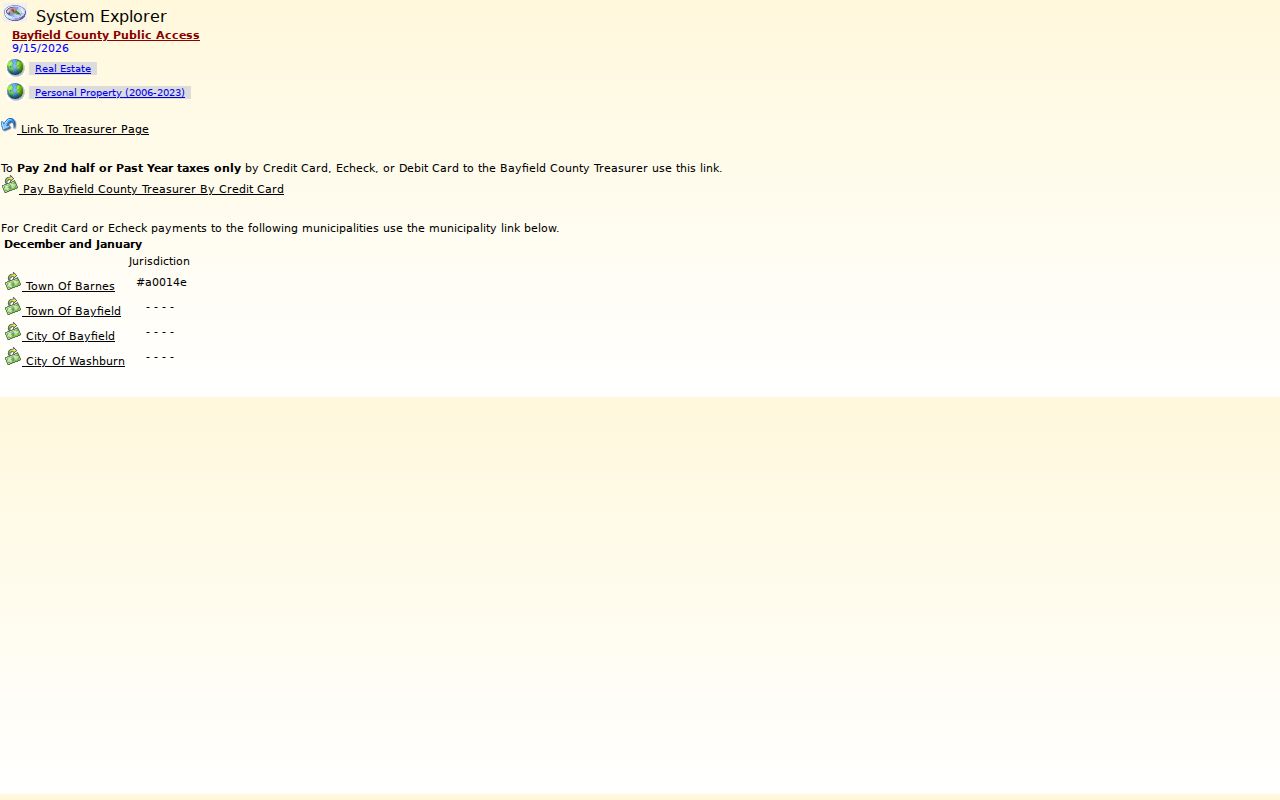
Payment channels vary by town, city, or village. Do not assume the county Treasurer collects every current municipal bill.
Finding a Bayfield County Tax Bill and Payment Status
Start from the parcel, not the mailing address. A Bayfield County parcel can sit in a town or city whose treasurer handles the bill, even when the postal city name points elsewhere. NOVUS links each municipality to the right collector. Treasurers mail bills in mid-to-late December. The county Treasurer then collects delinquent real-estate taxes for all 28 municipalities and keeps courthouse tax data. That role still does not make every payment a county transaction. Check the local collector before sending money anywhere.
- Use NOVUS to confirm the parcel's Tax ID/PIN and municipality.
- Open the Tax Record, Tax Bill and Statement tabs for the same year.
- Follow the municipality payment link or contact its treasurer to confirm receipt.
- For delinquency, ask the county Treasurer which current office holds the balance and how it is reported.
- Assessed value
- The value entered on the assessment roll for the parcel.
- Assessment ratio
- A municipality- and year-specific comparison used to calculate the tax system's estimated fair-market value.
- Tax bill
- The amount billed for a tax year; it is not the parcel's sale price.
- Tax delinquency
- An unpaid real-estate tax balance reported through the responsible treasurer.
Historical Bayfield County Property Tax Records
NOVUS covers online tax records from 2006 forward. Older coverage is patchier. Most municipalities have rolls online for 1970 through 2005, the Treasurer reports. Earlier rolls survive only in part. They exist for every fifth year from 1880 to 1945, where applicable. Intermediate years are scanned gradually. Available ranges depend on the municipality. Ask the Treasurer or local treasurer what survives before treating an online gap as a missing record.
For an ownership question, pair the roll with a deed or plat. A deed records the transfer itself. A plat can match an old lot description. The taxpayer was not always the fee owner, so the roll is a clue, not title evidence. Write the roll year and municipality beside every amount. Records for one parcel can shift over time.
The series still traces how a parcel was assessed and who received each bill.
The Treasurer's office page describes current and historic tax-data access. The NOVUS Real Estate search screen shows the parcel fields used before opening tax history.
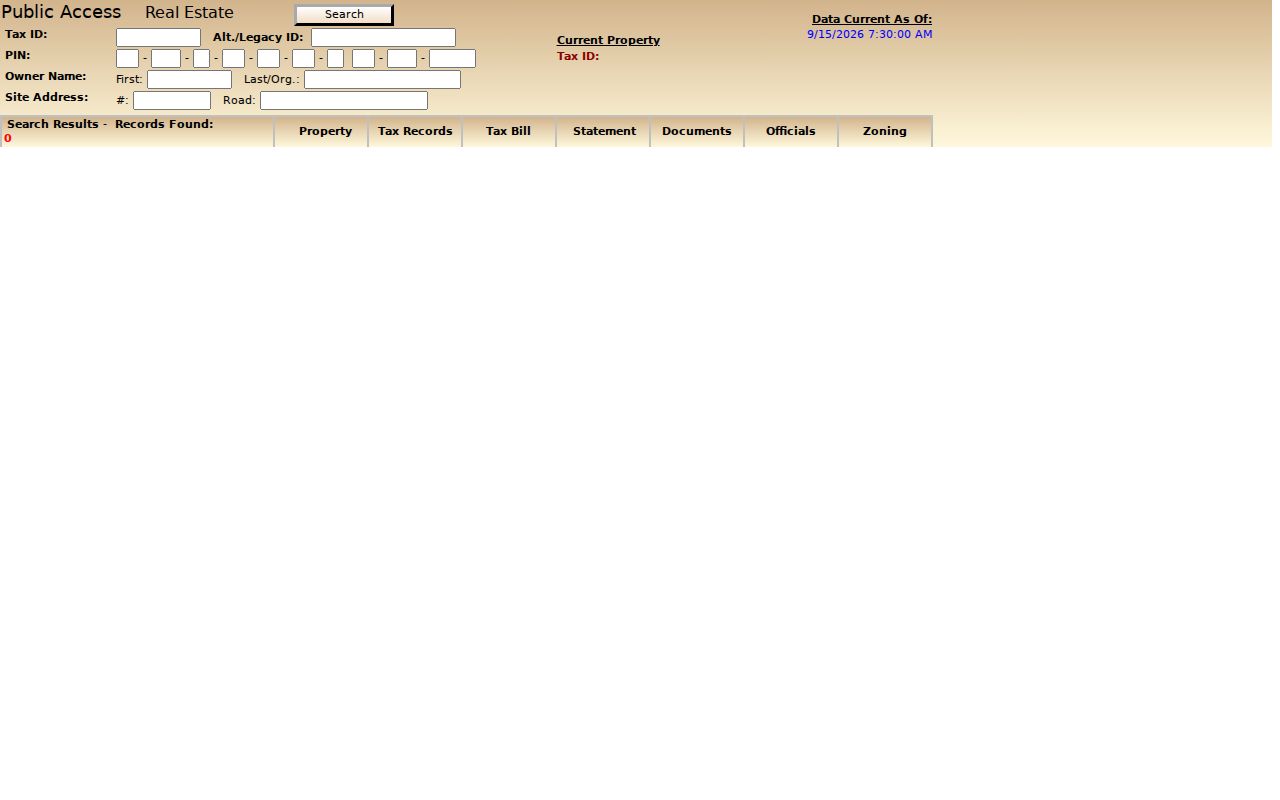
Label each historical entry with its municipality and exact roll year. That habit gives the next deed search the right starting point.
Bayfield County Assessment Ratios Vary by Municipality
Wisconsin Department of Revenue material treats each ratio as specific to one taxation district and year. The county's 2024 Statement of Assessment reports the municipal ratio used to calculate estimated fair-market value. DOR compares assessed values with its base values. It also reviews sales ratios. Major-class compliance is generally measured against full value. The tolerance is 10 percent for the same year, or once in a five-year period. Those rules explain why a tax estimate is not an independent appraisal.
Compare parcels the right way. Use the ratio for each parcel's own municipality and tax year. One countywide figure fits no town or city. Assessment value, estimated fair-market value, and recorded consideration can differ for legitimate reasons. For meaning beyond the bill, turn to the dedicated property-value page. For a parcel search, confirm the Tax ID first. Then confirm the municipality.
Bayfield City Revaluation and County Tax Context
The City of Bayfield announced a property revaluation for 2026. That notice applies to the city itself. It does not extend to every Bayfield County property or to a countywide reassessment. When a City of Bayfield parcel's assessment changes, set the notice beside its NOVUS card, the municipal ratio, and the tax bill. Check that the assessment year lines up. A Bayfield mailing address can sit outside city limits. Confirm the municipal boundary and tax district in GIS first.
The public material offers no district-by-district value trend and no current appeal dates or forms. To challenge a valuation, contact the assessor named on the parcel record. Ask about open-book and board-of-review options. Keep the notice, any comparable property records, and the dates the assessment was set. An old deadline or a value from another municipality is not a safe guide.
The City of Bayfield planning page documents the local 2026 zoning and preservation process change.
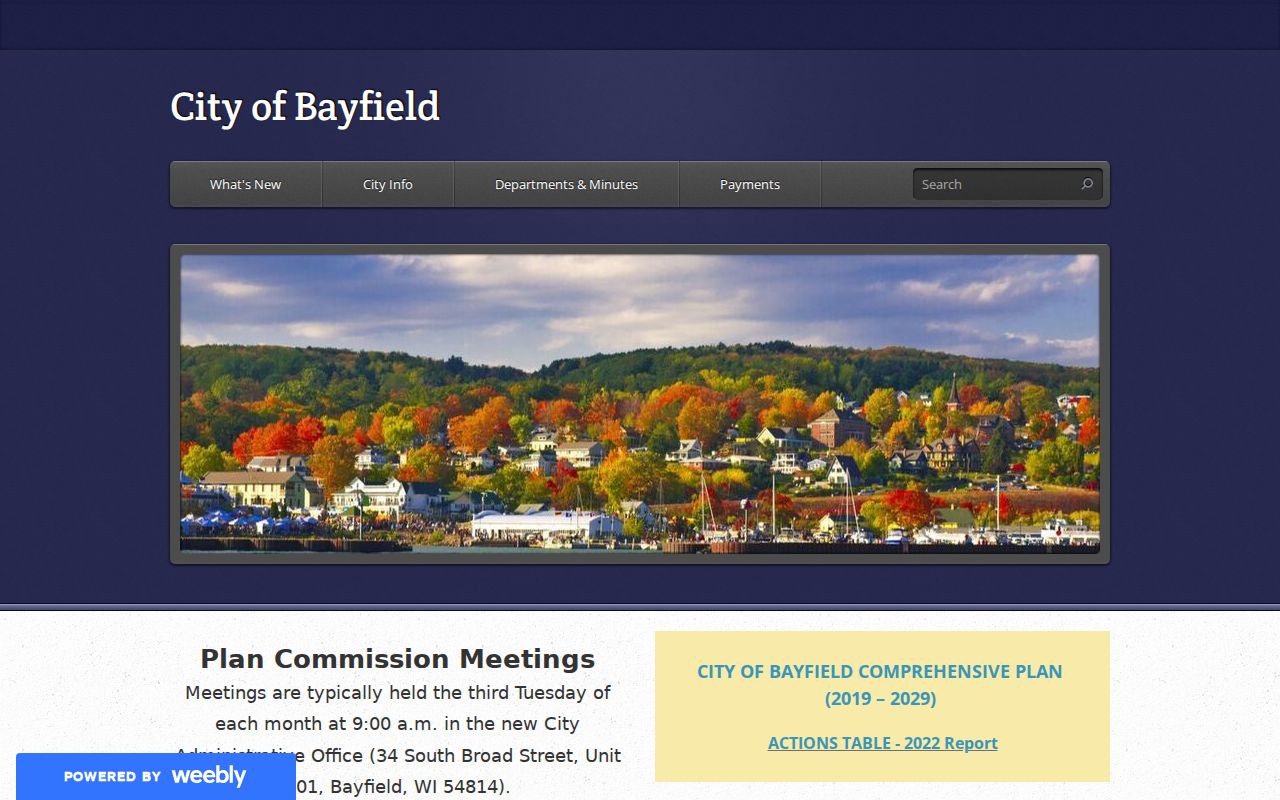
Appeal procedures rest with each municipality. Confirm current deadlines and forms with the assessor listed on the parcel record, because Bayfield County sets no single filing date.
Older Bayfield County Tax Data and Office Requests
When NOVUS lacks the year or item needed, ask the Treasurer or the municipal custodian for the existing tax data. Identify the parcel by both Tax ID and PIN. Name the municipality and list the years. Wisconsin Public Records Law favors access to existing government records, though the custodian may charge actual, necessary and direct costs. A narrow request, such as one parcel's tax roll entries over a few years, is far easier to satisfy than a demand for every tax record in the county.
Remember what a tax record is. It is a financial history, not a deed. A property tax record shows billing, payment and delinquency detail, but it cannot settle whether a transfer was valid or a boundary correct. For instruments, go to the Register of Deeds. For spatial questions, use GIS or recorded survey material. That separation also explains why an old tax bill may name someone absent from the newest parcel result or deed records for the same property.
How Bayfield County Owners Check an Assessment
No countywide appeal deadline, open-book schedule or universal form exists. Assessment review in Bayfield County is municipality-specific. Start with the assessor or local official shown on the NOVUS parcel record. Ask for the current notice and review steps. Verify which body handles the parcel. Keep the tax year, municipality, assessment amount and property facts together. A challenge should address the assessment evidence itself, not just the tax bill total.
Verify the local window. Bayfield County materials reviewed do not state a universal filing date. Contact the parcel's assessor promptly for the current open-book and board-of-review calendar before preparing a challenge.